New London, O’Neill, and me

I visited New London this past week and enjoyed the dense fog that had blanketed not just the small maritime city, but the region. What was particularly interesting was contemplating the sad, backwards looking playwright O’Neill. He did write a play, “Ile,” about John and Viola cook, a whaling captain and wife. People think way too much about “Moby Dick” and not enough about the other literary gems like “Ile”–or even Poe’s “Gordon Pym.” Anyway, John and Viola were a most unhappy couple, and too much wintering in the Arctic had a negative effect on their relationship–i.e., she went mad. He was a sadist, too.

During my visit and chat at Ft. Trumbull, I also thought of O’Neill’s recurring foghorn motif in “Long Day’s Journey into Night.” One couldn’t avoid hearing that sad unhappy croak periodically reminding you of some danger out there, awaiting….Fate is in the fog, always there and unapproachable. O’Neill used the same device in “Emperor Jones,” except that it was the drums….the drums….

Then it was time for some Thai soup. Fate didn’t intervene that night.

Monument Mountain and the edge

Back out in that perfect country, the western quarter of Massachusetts, the Berkshires. Rolling hills and approachable mountains and gentle second growth forests. I feel I’m in a new-old America, I’m like an Adam here. There is no recession, no Tea Party, no Obama. Eternal gentle life and small towns where people know who they are, and chaste girls and boys who play basketball. This is somehow where the country always meant to be.

There on Sunday, we treated ourselves to Monument Mountain. The wind was cold and icy and unforgiving. The snow and ice were thicker the higher you ascended. Fierce, the way I like it. The trees like bare poles on a ship awaiting a storm. That dry crusty snow crunch under my boots was encouraging. I couldn’t get the cheesy music from “Where Eagles Dare” out my mind.

There at the small and perilous top, where there were hardy trees of different sizes to cling to, we didn’t’ approach the edge. Too icy and we lacked crampons. There was an opening in the trees, a perfect viewing spot for the idyllic Berkshire countryside (minus the highway and cruddy commercial sprawls). Below was a drop of 40 feet—the first fall, and then a worse drop even further below. But the view was open and wide. It was a prize. We approached it VERY cautiously.

There was the all—the absolute edge we are seeking. The thrill, the pleasure and fear.

We took our pictures and regarded it for a moment. It is rare to be so close to an absolute–but it was a palpable absolute to me just then.

And then back down to the mortals.

The mortals, it turned out, weren’t so bad (excepting the barbarian who left a used prophylactic behind him in the parking lot). Someone found my Shuffle up near the top—I had been listening to Gibbon’s “Decline and Fall,” which, to me, reads like a contemporary novel. In the rush and bustle at the top, I didn’t notice the device come off. Sure enough, when we drove back, he saw us looking for it in the parking lot. The fellow climber gave it to me, no questions asked.

Newport St. Patrick’s parade

NEWPORT, RI–It was a cold crisp day last Saturday, but bright and clear. The parade is an interesting art form. One picks bits and pieces from it. You can see the military band and get one message. You can look at the green splashed like martyr’s blood in the arena and get several more–I’ve seen Ireland and it’s no more green than New England. But being “green” means something new these days–it’s not just a bunch of shamrocks.

The clowns playing “Tequila Sunrise” offer quite yet another. The viewers want something to scream at while drunk. Somehow the parade goes on, year after year, never really meaning anything coherent. But everyone gets something from it.

I myself like the bagpipes. Don’t know why, they aren’t melodious. But I do, and keep coming back.

What a winter–please let it last

All this lovely snow and I’ve only gone cross country skiing twice this season. Between attending to grownup matters and other things, so little time for fun….Hopefully the snow will soon pick up with a vengeance and give me a season finale. Yesterday it was downright warm and made me feel nostalgic–as warm sunny days tend to. When I feel that gentle golden sunlight–like a mother’s breath on a baby’s cheek.

Then I wonder: Whose dream am I in? it’s too innocent and happy to be mine. But I am seeing it….Or imagining I’m imagining it? There is the story about Cowper, in hell, and finding his worst torture was dreaming he was in heaven before waking up….

But, back to quantifiable reality that can be measured by thermometers and barometers…. It’s nice and crisp and gray again today. I love New England gloom. Love it.

In any case, I fear real spring could break out at any minute. And for those that whine about the cold winters–get them now before global warming makes them a thing of memory….

Whale Trail’s Tail

At last, we arrive at the fjord, the Saguenay River, black and relentless and the face of the grimmest nature as Puritan judge. We drive up the ramp on to the ferry, park, and wait for the exciting trip to Taddousac. The village just seems to appear out of nowhere on the side of a small mountain studded with pines. The houses are neat and always have gardens and there are two churches and the Hotel Tadousacc with its red tiled roof dominates the downtown. Here, as in the rest of Quebec, it’s a civilized place, people are soft spoken, polite, and they don’t carry guns—even if they do carry grudges against Canadian Anglophones.

Here, everything seems bigger and more exaggerated than what I’ve seen in New England. Deeper colder water, more whales, more mountains, more rivers and natural splendors. Even more sand. Nearby are the dunes—enormous cliffs of sand that face the St. Lawrence and are bigger than anything I’ve seen on Cape Cod. We take a day to enjoy the village, walk around its steep streets and get rid of the stiffness of driving so many hours.

The next day we spend motor touring—although I do feel time’s winged chariot drawing near. I know we must get a good day and kayak or the trip will be useless. But today, we drive out to Rose du Nord, a blip of a village on Route 123 in a postcard beautiful mountain valley that falls to the Saguenay Fjord. It’s a self contained serene place of maybe 20 houses, set back away from the river. It’s perfect, actually. There is a sight-seeing ferry that docks here, but the price is steep—50 dollars, and although the Trinity mountain, which is like a cathedral of rock rising from the Saguenay, is worth the view, I’ve seen it before. So, instead, we do some rock climbing in a steep cliff at the water’s edge, with many convenient handholds. We appreciate the idyllic views up and down the fjord from here, on this warm pleasant day.

Whenever I look out at the fjord I always know it’s something like 900 feet deep. Having kayaked parts of it, that’s a snack for thought. Climbing done, we walk up the hill to a tavern. There on a stone patio we drink beer and watch the bees zip around the tangle of flowers that had overgrown their planters ringing the patio. Looking over behind, we see cows grazing on the steep hillside, the grass is a rich electric green color.

We talk to the woman who runs the establishment—a thin serious looking person, but friendly and pleasant. She sayd she wanted to have a beer with us, but was a bit busy. But she finds it exotic we men of Boston have come so far North. In the back of my head, I always think, “We must all look alike to you.”

We make a point of stopping at Bay St. Marguerite, which has yet more dramatic views into the St. Lawrence. They say from the observation dock here, you can see belugas, but that has become a thing of the past. Pollution, apparently has driven them off. I recall once being here looking from the small bay, where a river feeds into the Saguenay. The sky was stormy and the waves whipping against the rocks and the mountains in the distance had wreaths of dark clouds and I felt this was the rending of a veil. I had seen some something powerful, and alive and gorgeous. It’s not like that today, but one has respect for a former lover that has shown special tenderness.

The next day we must make our move—the weather is favorable and the next day might not work. Some people have mocked Scott for attempting his reach to the South Pole in such bad conditions—as if he’d have a choice of picking his days. I decide on Grand Bergeronne. We need to do the best we can now, and this is a lucky spot. We drove due east to Grande Bergeronne, where I recognize the bearded grim harbor master from years past. It’s been a lucky spot to see whales. We pay the fee, park, and take out the gear. Wetsuits are a necessity here although they are no fun. We put out from the ramp.

I feel very alive. My wetsuit makes me look like a refugee from a fetish ball, is tight. I haven’t worn it in a while, and like O.J.’s glove, doesn’t quite fit right. I don’t want it cutting off my oxygen and I keep stretching the collar. We paddle and settle in to wait and listen and watch. This isn’t the epic part of the voyage.

The wait. I’ve waited for whales in boats, kayaks and on shore for 15 years. Nothing like it. Nothing more frustrating, nothing more exciting in a kayak. Out in the living gentle water we wait in an unreal unrealizable moment. The water, pinks, yellows, blues melding together gently. The universe was waiting to give me this and time stops, opens and seems to wait with me in the gentle lap of water. Ahead is 25 miles of waking dream, a living skin unbroken. Then finally a spurt. “Pffttt….pfffft….” I know that sound. We see a minke whale—20 feet of streamlined back. We turn to see a slick back. More and more appear, with the low serious sounding “phhtt…phhhtt” before the slick back slides underwater. This is what we wanted—the center of a years’ of talk and planning.

One then, two, and more. They swim, coil slightly, and and vanish. The whales are all around us. Some whales might be finbacks—very large whales—perhaps I’ve had them around me once or twice—but they are most likely minkes. They shock and thrill and delight us and probably don’t know it. They are behind us, to port, then to starboard. We fumble for the camera, which lacks batteries. The moment is only imprinted in the brain through the retina into the memory–so the remembrance will be fleeting and even more precious. The universe is so alive—the water, the sky, the whales, the seals.

The reality comes to just two hours. But it works. Cold and gloomy, we paddle back to the harbor and pull the kayak out of the water for deflation. Then it was time to return to camp.

Given the big bones of the place and our big ambitions, we have high hopes for the last day, maybe a paddle up the fjord. But a fog, thick and dangerous, hangs intermittently, so we can’t see more than 10 feet ahead at times. That’s that for whale hunting. We’d had a taste, at least. So the final day passes, and then it’s time to get back to camp. We go to the main bar in town that looks out over the harbor and gives one a view of clean white electric moonlight. A singer performs American folk songs. The people are polite, as always, and drinking there was a waiter who’d served us earlier that day in another bar—he recognized us and bought us a round. I bought him one back and he gave me a public thumbs up. I love the hospitality here.

People abuse nature because they don’t see it. It only visits them when they see a tornado or storm out of season triggered by global warming. It becomes part of the pain and fear mechanism that shapes everyone’s life. Fear of nature, fear of prison, bankruptcy, outsiders….You name it. We dump things and abuse nature in the slightest ways—cigarette butts, plastic wrappers, car exhaust. It accumulates. The whales can be frightened by hunters, but they don’t leave in fear. I think of the sad human world. We are always afraid, and this society with its media and government largely exists by stoking those fears.

The next day, we pack up camp and drive back the way we came. The air is crisp and electric, the water gloomy and grand. On the other side, a diminished side than the side we passed earlier on the way to Tadoussac, we linger looking over the fjord, seeing more whales spouting down below us. The water is gloomy forbidding soup again. Then we leave. I know the trip back would be less than half the trip.
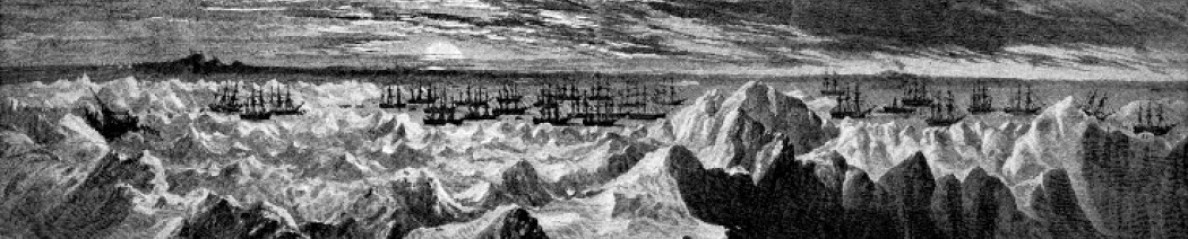
Whale Trail Three

Off we leave early to head to Canada the new Homeland Security state makes traffic back and forth a super pain in the derriere. So we leave early. I know the police state border has curtailed travel and nearly killed off tourism. We get a gray morning, the sort that, with a sour stomach—and I have one—doesn’t enhance the sense of distance from home. I miss my family, my grandkid especially and wonder if I’m not getting too old for this sort of gallivanting about.

Route 201 is a narrow roller coaster of a road through largely uninhabited tracts of forest to the border about 20 minutes and as many miles north. The border crossing can be miserable—today, it is. We’re the only car coming over from the American side, and for the first time in 25 years, after answering the usual tedious questions. I get asked inside for a special questioning session.

The border guard is lean, youthfully middle aged, a coolly polite and completely inscrutable. He could have come from central casting. I look at the free coffee and decide better. My stomach is still a bit queasy. I’ve heard the Venetian council would invite people at night to visit them—and just make them wait.After questioning us separately, he lets us sit alone for about 10 minutes before handing us back our credentials and letting us go.

No matter. We’re in and we drive to Quebec City—or rather the old city that perches on the hill by the bank of the St. Lawrence, which is a treat and a treasure. Regrettably, the most we can do with the given time is to perfunctorily walk from the Plains of Abraham—where a minor military maneuver cost the French the city and changed the complexion of North America forever—to the St. Lawrence’s edge.

Then, we leave past the the falls of Montmorency on to Mt. St. Anne, where we’d reserved a campsite. The office is closed, so we stake out a camp and pitch the two tents and then proceed to drive around looking for a local bar. The one closest and most inviting is a billiards hall with exactly one other customer, so we set out to find Chez Pedro—after a half hour of meandering through the dark hills and snaky highways, it turns into anEl Dorado, and we decide enough is enough and it’s time to make a fire and sleep.

We break camp early, and drive to the gate—where we receive the assignment for the campsite that we hadn’t taken. From there, we start driving. The line to Tadoussac is narrow, and runs through the famous Charlevoix region, rugged, beautiful as it sometimes dips near the St. Lawrence’s edge. The St. Lawrence is on one side, visible here and there, displaying many colors, lacquer black, pale and sometimes even cerulean blue. In the distance, north, lie the jagged humps of the Laurentian Mountain Range. Small villages punctuate the road, as well as a few town of middle size. Like Malbaie—whose name means a bad bay,and Baie St. Paul, situated on a dramatic headland one associates with the West Coast. It’s an artist town with a supermarket, and more than one gas station, however.The diet is not of the first rank. Through Quebec there are many fromageries–cheese vendors– and I live on sardines, Tabasco sauce and cheese curd. We want to save money for the nightlife instead of squandering it on mere food….The smell of old fashioned horseshit frequently assails our nostrils. This is still farm country

The sky here, on foggy days, hangs like an old drunk’s paunch. But the driving is always sublime. In many ways, this whole stretch is an idyllic place, no garish tourist attractions, and sometimes just long stretches of nothing but woods and mountains and an occasional farm stands. Further east, the signs began to demonstrate baleine (whale)  tours. Just as my patience is about to end, as always, finally St. Catherine comes into view. The water of the S. Lawrence here is dark, and the tides are more obvious and dramatic than they are further west. The river runs out and exposes kelp and rocks just as if were at the ocean proper. is obvious here. But hell, here the river’s width is something like 26 miles and it feels like an ocean.

Nuclear submarines are a real pain

Interesting article. The world’s baddest most sophisticated nuke sub ran aground off Scotland. This doesn’t say a lot either for super cutting edge military technology, or the Royal Navy. Nelson’s ghost must be doing somersaults.  Nuclear subs are a frightening thing, given what they are designed to do (move independently in stealth for months at a time) and are capable of by way of destruction (elimination of life as we know it).

The Thresher went down off of Connecticut more than 50 years ago due to some stupid mundane bolt out of place or something like it. Sooner or later, the sea is going to erode the hull and get at the reactor. What then? How many Soviet subs have gone down that we don’t even know about? Such a sub, like the Astute, is itself a weapon of mass destruction given its reactor payload.

Navies are supposed to protect civilians. We need protection from them.

Shudder Island

I got around to watching Shutter Island. I am working on a book about the Boston underworld and Boston itself, and I am a local product.  This movie ostensibly takes place on a hypothetical island in Boston Harbor, was naturally of some interest to me.  While not at all a bad film, Shutter Island ‘s “Island” left me feeling flat.

I have kayaked the harbor a dozen times, rounded the Brewsters several times, and there is nothing out there that looks like Shutter Island in the movie. I don’t think one should film a movie set in Boston in Romania or on a sound stage or wherever. Shutter Island  could be Maine, perhaps, with the big waves crashing on the cliffs. It wasn’t Boston Harbor. If you are using an exterior environment as part of the movie, don’t insult us. I must admit, if a director wants local color – or a writer does – then they must film or describe the actual locale. Don’t cheat. If Boston Harbor doesn’t  have the requisite waves and cliffs, set the story in the Bay of Fundy or wherever.

Spoiler: It became clear to me halfway through that the Leonardo DiCaprio was in fact not who he pretended to be….The movie isn’t subtle and I hate films with too many dream sequences….

Columbus: great sailor, awful person

Columbus was quite a mariner – and for that I respect him. He was brave. He was ambitious and boy, was he greedy….Well, let’s face it. Christopher Columbus wasn’t a nice paisan. He had more in common with Mussolini than St. Francis — to name two Italianate icons. He was a bloody slaver, a religious fanatic, and exquisitely avaricious.

He set the trend for eliminating “savages.” After he discovered – so to speak – San Salvador, he caused the virtual elimination of its rather kind and trusting inhabitants. He defined the way Europeans would treat natives for the next 500 years. He therefore deserves a holiday. It’s appropriate there is a day devoted to C.C. so we may contemplate his faith-based genocide and the complete rape of the “new” world. He saw something and just took it by force of arms. He represents a strong current in U.S. and Western Hemisphere history.

Indeed, if he were around today, he’d be a Fox News host. He and Fox News host Rick Santorum (another paisan) both share a cutting edge 15th century world view.

Whale warriors at war with each other

Peter Bethune is now accusing his fellow Sea Shepherds of scuttling his lovely craft the “Ady Gil” for theatrical effect. This, if true, is sad. What is worse is that the activists’ infighting is distracting to the main cause: the whales. The whalers are still eliminating whales. I still like the Sea Shepherds, and no, they don’t have to be perfect. Obviously the whalers have an easier time presenting a single front – they are paid to be there and under direct command of a subsidized government-run industry. The Sea Shepherds are volunteers and have strong egos and a variety of private ideas. This sort of dissension is to be expected, I think.

In fact, it  might even make for a more exciting next season.